
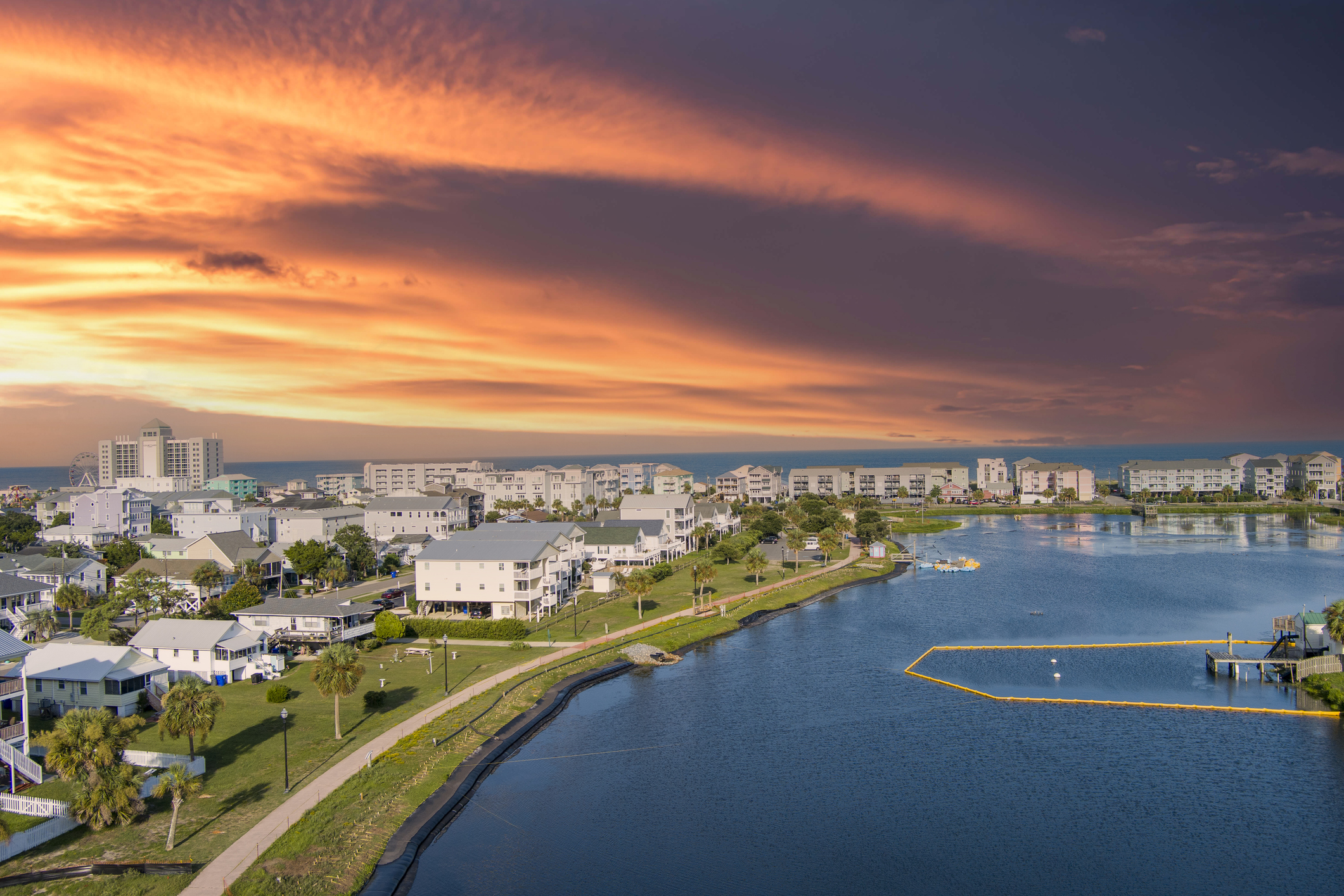
Wilmington, NC Is Booming — Here's What Buyers Should Actually Know Before They Move
WILMINGTON, NC IS BOOMING: HERE'S WHAT BUYERS SHOULD ACTUALLY KNOW BEFORE THEY MOVE
Wilmington is booming, and most people who move here love it — but a surprising number wish they'd done more homework before picking their specific neighborhood. The growth is real, and the lifestyle is real, but a few miles in the wrong direction can mean a completely different flood zone, insurance bill, or commute. I relocated to this area myself in 2020 and work with buyers doing this from a distance every week. Here's what's actually driving the boom, real price data and trade-offs for the areas people are moving to, and the infrastructure and cost realities many buyers don't discover until after they've closed.
The Growth, By the Numbers
The Wilmington metro — New Hanover, Brunswick, and Pender counties combined — reached 492,772 people as of July 2025, per U.S. Census Bureau data, up from 480,374 the year before. That's more than 12,000 new residents in 12 months, a 2.6% growth rate that ranks Wilmington 7th nationally among all U.S. metro areas for percentage growth.
Many of the buyers I work with are coming from New York, New Jersey, and other high-cost states, and they're not just visiting — they're buying, for a consistent set of reasons:
Retirement on the coast. After decades of working somewhere they didn't choose for the scenery, they finally get to choose — salt air and a February beach walk.
Remote work flexibility. When a job lives on a laptop, the question shifts from "where is the work" to "where do I want to live."
Lower relative cost of living. Wilmington's overall cost of living runs roughly 5% below the national average, though unevenly — housing runs about 20% below the national average (the piece that carries the whole number), while utilities, healthcare, and transportation run slightly above national averages. This includes renting, not just buying. North Carolina's flat income tax rate dropped to 3.99% for 2026 (from 4.25% the prior year), with triggers in state law that could lower it further from 2027 on, and the state has no estate tax.
Real seasons. Unlike Florida's "hot and slightly less hot" pattern, Wilmington averages 241 days a year with a high of 70°F or better, and 157 days at 80°F or above. January's average high is 57°F, with roughly 37 nights a year dipping to freezing and about 9/10 of an inch of snow annually.
Coastal life without giving up amenities. Much of the country's beautiful coastline is remote — you get the water but give up the hospital and airport. Wilmington offers a real downtown on the river, a university, a symphony, an active restaurant scene, a working port, an airport 8 miles from downtown, and serious hospital investment (more below).
On jobs and healthcare specifically: Amazon is opening its largest North Carolina building here — more than 3 million square feet in Pender Commerce Park, with over a thousand jobs hiring as of this summer and operations beginning this fall. Novant Health approved a $1.1 billion regional expansion in February and broke ground this August on the first new inpatient rehab hospital this region has seen since 1994. UNC Health also announced in May its intent to build a hospital here. Companies at this scale don't commit billions to a market they expect to stall out.
Area 1: Wrightsville Beach
Wrightsville Beach is the area people point to first, and it earns the attention — a small, tight barrier island community with clean beaches, restaurants concentrated in a few blocks, and water that hits the low-to-mid 80s (around 84°F) with clear blue-green color for much of the summer.
Here's what it actually costs: the median sale price is around $1.8 million as of August 2026, up double digits year-over-year. Oceanfront homes and anything with deep-water dock access regularly clear $3 million, with the top of the market considerably higher — 317 South Lumina closed for $9.3 million in April 2026. You're buying into a 5-mile barrier island with roughly 2,800 residential properties total; between geography and zoning, the town isn't creating new lots, so when something comes to market, it draws from a national buyer pool competing over a footprint that can't get bigger. What sold recently closed at an average of 93% of original asking price.
The town's own flood page states the entirety of Wrightsville Beach sits in a designated flood hazard area — if financing, your lender will require flood insurance, which is a separate policy from homeowners and wind/hail coverage, and standard NFIP building coverage caps at $250,000. Statewide, NFIP flood insurance averages around $925/year, but in a low-risk X zone it runs closer to $467/year, while a barrier island VE zone can put you in a completely different range. Under FEMA's Risk Rating 2.0, every property is priced individually based on elevation, distance to water, and construction type, with premiums able to step up as much as 18% a year until reaching the full-risk rate — two houses on the same street can carry very different premiums.
Wrightsville Beach is right for buyers who want the genuine barrier island experience and have the financial position to carry the added maintenance and insurance costs on top of the home premium itself.
Area 2: Mayfaire/Lumina Corridor, Ogden, Porters Neck, and Scotts Hill
For buyers who want proximity to Wrightsville Beach without the barrier island flood exposure or seven-figure price tag, this corridor — running from central Wilmington toward the beach — is worth a close look. The median sale price in the Mayfaire neighborhood itself is around $550,000, at about $312/sq ft, anchored by the 610,000-square-foot Mayfaire Town Center (Belk, The Fresh Market, a 16-screen theater with IMAX).
Moving north, you hit Ogden, Porters Neck, and Scotts Hill — more suburban space and better ICW access:
Ogden runs a median around $360,000, the value entry point into this corridor, roughly 15–20 minutes from Wrightsville Beach on a normal day (longer during summer beach traffic).
Porters Neck sits north with water access via Pages Creek, Futch Creek, and the ICW, plus plenty of private docks. The median sale in Porters Neck Plantation is around $820,000, with homes selling in roughly 2 months at about $289/sq ft; the broader area ranges from about $500,000 to over $1 million. It's built around the Tom Fazio-designed Porters Neck Country Club, with a shorter membership wait list than Landfall's — at least currently.
Scotts Hill got a major infrastructure boost: on June 16, 2026, Novant Health opened the Scotts Hill Medical Center, a $294 million, 250,000-square-foot hospital with 66 beds, 8 operating rooms, a cardiac cath lab, and heart and vascular services, staffed by about 700 team members at full capacity — on a campus that already had a 60,000-square-foot medical office building and an emergency department running since 2015. New construction here includes Scotts Village and Indigo at Abbey Preserve (new homes from the high $500,000s to about $800,000), plus Blake Farm, a D.R. Horton community with townhomes starting around $290,000 and single-family homes from about $440,000 to $600,000. Seagate Marina offers wet slips and dry storage (also with a wait list), and a new Wawa and Publix are coming in. The trade-off here is commute: about 10–15 minutes to Mayfaire and roughly 25 minutes to Wrightsville Beach.
Area 3: Leland
Across the Cape Fear River in Brunswick County, Leland is one of the fastest-growing, fastest-changing places in the entire region. The population math is striking: Leland went from 22,895 people in the 2020 census to 33,650 by 2024 — 44% growth in 4 years — and the town's own planning projects it will more than double again to over 74,000 people by 2045.
The median sale price in Leland is around $390,000, at about $228/sq ft over the past 12 months as of August 2026. June 2026 was Brunswick County's strongest June in about 20 years, with 720 closed sales, 38% of them new construction, according to the Brunswick County Association of Realtors. Compare that to the broader metro median of about $430,000 (July 2026) or $420,000 (August), and Wrightsville Beach's roughly $1.8 million median, and it's clear why the bridge sees the traffic it does each morning.
Leland is really a collection of masterplanned communities that price quite differently as of mid-2026:
Brunswick Forest: median around $569,000, though homes are averaging 72 days on market.
Compass Point: median around $725,000, up over 7.6% year-over-year.
Magnolia Greens: median around $500,750, up about 6%.
Waterford of the Carolinas: median around $485,000.
Healthcare and retail are expanding here too: in March 2026, the state approved the Novant Health Leland Medical Center, a $151 million, 142,000-square-foot hospital with 20 licensed beds, a 24/7 emergency department, and five procedure rooms — construction starts early 2027, with a targeted opening of January 2030. Novant is also opening an ambulatory surgery center in the area later this year. On retail, Leland Village is bringing a 130,000+ square foot center anchored by a 50,000-square-foot Publix. Two large residential projects are also in the pipeline: Terrapin (955 acres, rezoned December 2025 for 3,398 residential units) and Jackeys Creek (1,440 acres, planned for roughly 6,000 units).
The honest trade-off: you're about 35–40 minutes from the beach, and the only waterfront property in Leland is on the Cape Fear River or a pond — no ICW or ocean frontage. If your daily life doesn't require crossing the river often, Leland is one of the strongest value propositions on this coast.
Reality Check #1: Two Major Bridge Projects
There are two separate, significant bridge stories affecting this market right now.
The Cape Fear Memorial Bridge connects Wilmington to Leland and everything west of the river. Built in 1969, it's a four-lane vertical lift bridge that NC DOT has directly called functionally obsolete. The replacement project (state transportation plan ID HB000039) carries a current cost estimate of $1.1 billion. Funding secured so far: $242 million from a federal large bridge grant plus $85 million from the state, leaving roughly $773 million unfunded. The federal grant is conditional — the project must be shovel-ready by September 2027 or the funding is at risk.
In February 2026, a private firm submitted an unsolicited proposal to build and operate the bridge as a toll crossing (up to $2.75 per crossing); NC DOT rejected that specific proposal in late July 2026, citing duplicated scope and unfavorable terms — but tolling as a financing mechanism generally remains on the table. NC DOT is still pursuing a publicly delivered toll option, and the Wilmington Metropolitan Planning Organization must vote by February 2027 on whether to approve tolling as the financing mechanism or withdraw the project entirely (withdrawal would forfeit the secured state funding). The environmental assessment is complete and approved; public hearings are scheduled for September 14 (Wilmington) and September 15 (Leland), with the public comment period open through October 15, 2026. Two design alternatives remain on the table: a movable span (65 ft, rising to 135 ft) or a fixed span at 135 ft with no openings. Construction contracts are targeted for December 2027 — planning is actively moving, but construction has not yet started. In the meantime, the existing bridge still needs maintenance; single-lane deck repair closures on August 12–13, 2026 caused significant backups, following similar closures in late May.
The Wrightsville Beach bridge replacement is a separate, $105 million NC DOT project replacing three bridges on the route to Wrightsville Beach — two along West Salisbury Street (US 74) and one on Causeway Drive (US 76). The contract was awarded in early 2026; utility relocation began summer 2026. Construction on the smallest bridge (the Kenan's Creek crossing) begins by the end of this year, not closing to traffic until after Labor Day; the two larger bridges follow with overlapping work to save time. NC DOT has fast-tracked the project by about two years, moving the completion target to spring 2030 (from an original 2032). NC DOT has also proposed changing the Heide Trask drawbridge schedule so pleasure boats get openings only on the hour.
A third project stacks on top of these two: about a mile and a half from the bridge work, NC DOT has planned an $81.4 million overpass at Military Cutoff Road and Eastwood Road — a flyover carrying Eastwood over Military Cutoff. That intersection handles about 75,000 vehicles a day and carries a Level of Service E rating (NC DOT's second-worst grade). Construction is planned for late 2027 through late 2031; as of this summer, this project's placement in the state plan is somewhat less locked in than the bridge projects. From roughly 2027 through 2032, the corridor between Wilmington and Wrightsville Beach will have a major bridge replacement program and a major interchange build happening simultaneously, a mile and a half apart — local officials have publicly noted concern about that overlap.
Reality Check #2: Traffic and Weather
Traffic, beyond the projects above:
Military Cutoff at Eastwood: ~75,000 vehicles/day today, projected to hit 100,000 by 2045.
North College Road at MLK Jr. Parkway: ~50,000 vehicles/day. NC DOT is finalizing a $288.5 million interchange rebuild — right-of-way acquisition starts this summer, utility work through 2028, construction not starting until 2029. (For context on cost escalation: this same interchange was estimated at $95 million in 2018.)
Gordon Road: an $81.1 million widening of 2.5 miles from I-40 to Market Street, under construction through 2029.
Market Street through Ogden: median and access management work is largely complete, meaning more U-turns and fewer left turns than some drivers are used to.
The Independence Boulevard Extension, a $424 million project that would have added a north-south route through the middle of town, was removed from the state transportation plan by the Wilmington MPO in late May 2026 on a 12-to-1 vote following strong neighborhood opposition.
Seasonally, Wrightsville Beach draws roughly 50,000 visitors during summer months on an island with about 2,800 residential properties. Paid parking runs March 1 through October 31; the town actually lowered rates for 2026 (standard spots from $30 to $25/day, premium from $35 to $30) after daily parking transactions dropped from 54,000 in 2024 to 44,000 in 2025. UNCW adds to seasonal shifts too — nearly 6,000 students move in over a 5-day window each August.
Weather: NOAA's August 2026 update calls for a below-normal hurricane season (7–13 named storms, 2–6 hurricanes), raising the probability of a below-normal season from 55% to 75%, driven by a strengthening El Niño and heavy wind shear. Colorado State's final August forecast calls for 9 named storms, 4 hurricanes, and 1 major hurricane — which would be the least active season since 2014 — putting the odds of a major hurricane hitting anywhere on the U.S. coast at 16%, versus a 43% historical average.
The honest context: National Weather Service data shows Cape Fear averages a hurricane with 74+ mph winds about every 6 years, and one with 115+ mph winds about every 17 years. Between 1871 and 2021, 73 tropical systems brought at least tropical-storm-force winds to this area. Hurricane Florence made landfall right at Wrightsville Beach on September 14, 2018. Worth knowing: in September 2024, an unnamed system (Potential Tropical Cyclone Eight, which never organized enough to earn a name) crawled through at about 3 mph and dropped 20.81 inches of rain on Carolina Beach and just over 20 inches near Southport — classified by meteorologists as roughly a 1-in-500-year rainfall event on Bald Head Island. Wilmington averages roughly 57–60 inches of rain a year against a national average of about 30. On heat: July averages a high of 90°F, August about 88°F, with roughly 45 days a year at or above 90°F, and annual relative humidity averaging 74% (76–80% in summer months). One practical note: in North Carolina, once a named storm enters a defined tracking box in the Atlantic, insurers stop binding new coverage — a real factor in timing a purchase during hurricane season.
Reality Check #3: What's Actually Happening to Prices
In August 2018, trailing-12-month data for the Wilmington metro showed a median sale price of $242,500, 89 average days on market, and homes selling at 96% of original list price. As of August 2026: median price $420,000 (approximate), 73 average days on market, and homes selling at 95% of original list. Looking at just the last 3 years, the metro median was about $396,000 in August 2023 — only about 6% growth over 3 years at the metro level.
But that metro median hides what's happening in specific pockets closer to the water. As one illustrative example: Lion's Gate, a 1980s townhome community (not new, not luxury — units run roughly 1,200–1,430 sq ft, three bedrooms) shows this price history on one tracked unit: $78,000 (1984) → $81,500 (1989) → $128,000 (1999) → $271,000 (2008) → $279,000 (2018) → $435,000 (2023) → $625,000 (2026) — a 124% increase just in the last 3 years, with average days on market of 11 and closing at 102% of original list price. That is not a stabilizing market; it's the kind of appreciation the metro median averages away.
Homes sitting on the market are typically overpriced for their condition or location; properly priced homes in the right location sell quickly.
The Bottom Line
This coast isn't one market — it's a dozen or more distinct areas, each with its own trade-offs, and you can't sort that out from a map or a real estate app. Towns that look 10 minutes apart on a screen can live completely differently day to day.
Getting a piece of this wrong on a $500,000 or $1 million home doesn't just cost money at closing — it costs carrying expenses you didn't budget for, a commute you never stress-tested, or a community that looked right on paper but doesn't fit how you actually want to spend a Tuesday, often discovered two years later when it's expensive to undo.
If you already know you want to be here and just aren't sure where to land, that's exactly the conversation to have before you make an offer. Call or text me at 910-218-8187, or book a buyer consultation through the link below. Tell me your target price range and what you're looking for, and I'll tell you what buyers are doing right now in the area that fits your profile.
Population, market, infrastructure, and weather data referenced in this article reflect publicly available figures as of summer 2026 (U.S. Census Bureau, NC DOT, Brunswick County Association of Realtors, NOAA, Colorado State University, National Weather Service, and municipal sources) and are subject to change as projects and forecasts evolve. This content is for informational purposes only; buyers should independently verify current data, flood zone classification, and infrastructure project status for any specific property before making an offer.
Frequently Asked Questions
1. How fast is Wilmington, NC growing? The Wilmington metro (New Hanover, Brunswick, and Pender counties) reached 492,772 people as of July 2025, up more than 12,000 residents in a single year — a 2.6% growth rate that ranks 7th nationally among U.S. metro areas.
2. What's happening with the Cape Fear Memorial Bridge? NC DOT has called the 1969 bridge functionally obsolete. A replacement project carrying a $1.1 billion estimate has secured $242 million in federal funding and $85 million from the state, leaving roughly $773 million unfunded. The project must be shovel-ready by September 2027 to keep the federal grant, and a decision on tolling as a financing mechanism is expected by February 2027. Construction has not yet started as of this writing.
3. Is Leland, NC a good value compared to Wilmington? Yes, for buyers whose daily life doesn't depend on frequent trips across the Cape Fear River. Leland's median sale price runs around $390,000 versus the broader metro median of roughly $420,000–$430,000, but Leland is about 35–40 minutes from the beach with no ICW or ocean waterfront (Cape Fear River and pond frontage only).
4. How active is hurricane season expected to be in coastal North Carolina? Forecasts for the 2026 season point to below-normal activity, with NOAA raising the probability of a below-normal season to 75% and Colorado State projecting the least active season since 2014. That said, Cape Fear historically averages a hurricane with 74+ mph winds about every 6 years, so preparedness remains important regardless of any single season's forecast.
5. Are home prices near Wrightsville Beach, NC still rising quickly? Yes, in many pockets. While the broader Wilmington metro median grew only about 6% over the past 3 years, specific communities closer to the water have appreciated far faster — one tracked 1980s townhome community, for example, saw a 124% price increase over the same 3-year period, illustrating how much metro-wide averages can understate appreciation in high-demand pockets.
— Kimberly Crouch, eXp Realty | Coastal Relocation Specialist | Wilmington & Wrightsville Beach, NC 25+ years of combined experience in real estate, finance, and accounting; former CPA (Currently Inactive); eXp ICON agent (top 2% of eXp Realty agents nationwide), top real estate professional in local market per the 2026 RealTrends Verified City Rankings, New Hanover and Brunswick County Real Producers Top 300 and Rising Star in 2025 and 2026.