
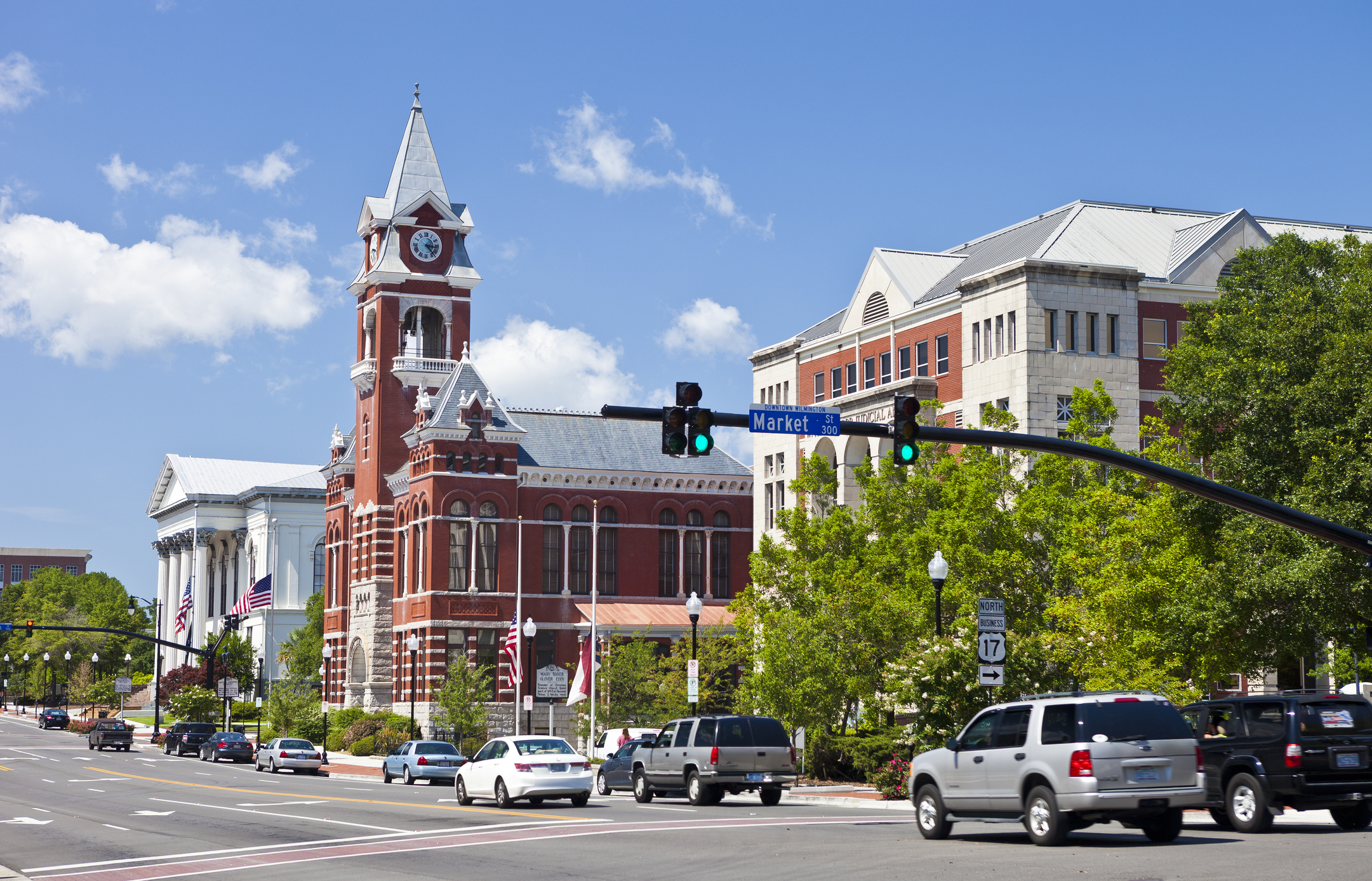
10 Ways Wilmington, NC's Market Runs Opposite the Rest of the Country
10 WAYS WILMINGTON, NC'S MARKET RUNS OPPOSITE OF THE REST OF THE COUNTRY
In a year's time, the Wilmington metro added more than 12,000 people — enough to rank number seven in the entire country for population growth by percentage. In that same U.S. Census release, 310 of the country's 387 metro areas grew slower than they had the year before. Nationally, growth is decelerating almost everywhere. Wilmington didn't get that memo. Here are 10 ways this market is running in the opposite direction of national trends, and what each one actually means if you're buying here.
10. A Small Coastal Airport That Doubled Its Traffic
A regional airport more than doubling passenger traffic in 10 years is not normal. A decade ago, roughly 760,000 travelers moved through Wilmington International Airport (ILM); last year, that number topped 1.8 million — a record. Seven carriers now fly out of ILM, three of them low-cost airlines added in just the last four years, and the airport authority has close to $250 million in capital projects underway, from a new parking deck to a terminal expansion. Across much of the country, small regional airports are losing carriers, not gaining them, with residents of similarly sized towns often driving two hours to reach a hub.
One honest asterisk: Allegiant closed its base here in January and cut a chunk of its nonstop routes, and airport officials are forecasting this year's traffic to come in flat or slightly down. Both things are true — the 10-year trend is real, and the last 12 months have been bumpier.
This matters for relocating buyers who get asked, "How hard is it for our friends to visit?" ILM is small, and small is the point — close parking, quick security, though not always a nonstop flight. Drive time to ILM varies significantly by where you land in the metro: about 20 minutes from Ogden or Porters Neck, 10–15 minutes from Mayfaire, but well over an hour from Sunset Beach in Brunswick County. If you're buying a second home you'll fly into several times a year, run that specific drive yourself before picking a community.
9. Inventory Went Up. Prices Went Up Too.
This combination usually doesn't happen. In July 2026, active listings across the Wilmington metro ended the month at 4,604 — up 4.2% from 4,420 a year earlier, meaning more homes to choose from. Over that same 12 months, the median sale price rose about 7.5% year-over-year. The textbook rule says more supply means softer prices; that's not what happened here, because actual months of inventory sat at just 3.6 months in July — still a stable, seller-favoring market.
The nuance: months of inventory was trending up earlier in the year (higher than the same month the prior year), but in May it dropped back below May 2025's level, and that trend continued through July. In plain terms, the number of active listings has been building steadily for a couple of years, but demand has kept pace, so prices haven't followed inventory down.
For buyers, this means real choice has returned — you can tour six houses over a weekend and take a night to think it over, though not much longer. Well-priced homes still move quickly. It does not mean you're walking into a discount: many local sellers have significant equity or no mortgage at all, and simply won't sell below their number if they don't need to. More visible price cuts don't mean the median is falling — it usually means some sellers started too high in a market that isn't climbing as fast as it was.
8. A Billion Dollars of Healthcare Investment Going In, Not Out
Most relocating buyers say the water is what draws them here — then start looking up hospitals the same night. On August 4, 2026, Novant Health broke ground on the new Novant Health New Hanover Rehabilitation Hospital on the Wrightsville Avenue campus: an $85 million project with 60 private rooms, opening in early 2028, nearly doubling the number of rehab patients the system can serve annually. That's one piece of a larger plan — back in February, Novant announced a regional investment estimated at more than $1 billion over 5 to 7 years, centered on a new heart and vascular tower at the 17th Street campus (projected to open in 2031) plus an 80,000-square-foot outpatient heart and vascular building. (To be precise, since these numbers get conflated online: the rehab hospital is $85 million; the billion-plus figure refers to the entire multi-year regional plan it's part of.)
Across much of the country, smaller metros are losing hospital services — departments closing, specialists leaving, patients driving 90 minutes for cardiology care. Here, investment is flowing the opposite direction, specifically into cardiovascular and rehabilitation care, because demand already exists locally. Practically speaking, drive time to medical campuses varies significantly by which pocket of the metro you buy in, and mapping software doesn't always reflect real-world routes — worth checking your specific route during busy times before committing.
7. Almost Nobody Is Searching for Us. We're Growing Anyway.
This one genuinely doesn't add up on paper. According to Redfin migration data, only about 0.16% of home buyers nationally searched to move into Wilmington from outside the metro — sixteen hundredths of one percent. Yet Wilmington ranks in the top 10 nationally for growth by percentage.
Compare that to what happened in Austin, Boise, and Tampa — places everybody found at the same time, where prices went vertical within 24 months as out-of-state money flooded in, followed by a sharp correction. That hasn't happened here. It's worth being precise about what this number does and doesn't tell you — it's search traffic on one website, not actual closings — but it does suggest that demand here is broad and quiet: a steady stream of individual decisions rather than one collective wave arriving in the same 18-month window.
6. Amazon's Biggest Building in the State Landed Next to a Beach Town
Amazon's largest facility in North Carolina isn't in Charlotte — it's on US 421 just north of Wilmington, straddling the New Hanover and Pender county lines. The facility spans 3.2 million square feet across four and a half floors, representing roughly 1,000 full-time jobs on a site Amazon has invested around $350 million into. A separate 142,000-square-foot delivery station is also going in nearby at Pender Commerce Park, adding 100+ more positions.
Status as of this writing: construction is finishing, job postings began this month, and the opening is expected this fall — notably ahead of the holiday season, which is somewhat backwards from typical timing. A company this size normally locates its biggest facility next to a major interstate hub in a major metro; instead, the state's largest Amazon facility landed about 25 minutes from downtown Wilmington.
No one should buy a house because a warehouse is nearby. The real significance is economic stability: for years, a fair critique of this area's economy was its heavy reliance on tourism, healthcare, the university, and construction. A 3.2-million-square-foot facility with 1,000 jobs is a different kind of anchor, the sort that helps keep a market from softening and signals where larger companies are choosing to invest. The practical trade-off is traffic — expect increased truck volume on 421 and knock-on effects along the Highway 17 corridor heading north into Pender County.
5. Homes Are Taking Longer to Sell. Prices Are Rising Anyway.
The median sale price for the Wilmington metro was $430,000 in July 2026, up 7.5% from $399,900 in July 2025. Over that same period, homes went under contract in an average of 72 days in July 2026 compared to 68 days a year earlier — a gradually rising trend. Almost everywhere else, longer time on market signals softening prices. Not here, for the same reason covered above: actual months of inventory sat at 3.6 in July, still a relatively low, demand-driven number.
The takeaway to keep in mind: rising days on market does not signal a coming crash — it means overpriced listings sit while correctly priced ones still move quickly. The extra time does give buyers some breathing room, which matters given how North Carolina's standard purchase contract works: it doesn't include a financing, inspection, or home-sale contingency. Instead, buyers pay a due diligence fee upfront (almost always non-refundable) and get a due diligence period to inspect and investigate the property. Buyers can walk away during that window, forfeiting the fee; sellers don't have that same option once under contract. (This applies to resale purchases under the standard NC contract — new construction typically involves separate builder contracts, some of which may include different terms.)
4. Four Out of Five New Residents Are Coming From Outside New Hanover County
New Hanover County has projected exactly how much bigger it expects to get, and the number surprises longtime residents. In its draft Destination 2050 plan, the county projects a population of 333,488 by 2050 — an increase of more than 107,000 people, about 48% measured from the 2020 census. Two honest caveats: this is a draft plan, not adopted policy, and the growth clock started in 2020, meaning a portion of that increase has already happened.
According to the plan, 81% of that growth comes from people moving in from elsewhere — the opposite of how most American counties grow, which is typically organic growth from within. That dynamic changes something for newcomers: moving into a town with a population that's been stable for decades can make finding social footing slow. That's less of a challenge here, since a large share of the population has arrived within just the last several years, and the local infrastructure for meeting people reflects that — newcomer clubs, pickleball and tennis leagues, boat clubs, run clubs, art groups, and volunteer organizations are all accustomed to a steady stream of new faces and actively run programs to welcome them.
The flip side is land: Wilmington and New Hanover County are essentially built out, with very little new supply coming. Growth is pushing north to Castle Hayne, out toward Porters Neck, across the river into Brunswick County, and up into Pender County — one of the reasons pricing here doesn't behave the way you'd expect from a traditional supply-and-demand model.
3. Our Cost of Living Is Only Slightly Below the National Average
So why do so many people think this area is a bargain, when homes here cost about what homes cost everywhere else in the country? Wilmington's overall cost of living runs about 5% below the national average — a figure that shows up in nearly every relocation article about the area. But nobody moves here from "the national average" — they're moving from a specific place. For many clients coming from New York, New Jersey, Massachusetts, the DC area, or California, the difference isn't close, and it's driven by housing and taxes, not the index number. For buyers coming from Raleigh, Charlotte, or Richmond, the math can be closer to a lateral move — worth running your own specific numbers before assuming a windfall.
Two additional housing costs depend entirely on the specific address and don't show up in any general index. First, property tax: for buyers coming from high-tax states like New Jersey or New York, property taxes here are often dramatically lower, a real driver of why the math works for them — for others, depending on origin, taxes may be comparable or slightly higher, and it depends heavily on the specific county and whether the property sits inside city limits, since rates vary. Second, insurance, which typically runs the other direction: coastal properties require wind and hail coverage (essentially hurricane insurance, often written separately from a standard homeowners policy), plus flood insurance on top if needed or desired. Expect insurance costs to run higher here than in many other markets — how much higher depends entirely on the specific address and where you're relocating from.
2. The Country Slowed Down. We Didn't.
Between July 2024 and July 2025, the Wilmington metro added more than 12,000 people — a 2.6% increase, ranking 7th nationally out of 387 metro areas for percentage population growth. Set that against the other finding in the same Census release: 310 of those 387 metro areas grew slower between 2024 and 2025 than the year before. The national trend was deceleration almost everywhere; Wilmington didn't just avoid that trend, it outranked nearly the entire list.
One detail that doesn't get reported often, and reveals something real about where growth is actually concentrated: that 2.6% figure is a three-county average across Pender, Brunswick, and New Hanover. Brunswick County grew 4.7% — the fastest-growing county in North Carolina and 6th fastest in the entire country. Pender grew about 3%. New Hanover County, where the city of Wilmington itself sits, grew only about 1.1%. In other words, when people say "everyone's moving to Wilmington," what's actually happening is that people are moving to the edges of the metro — which is why Leland, Hampstead, Castle Hayne, and the 28411 corridor near Scotts Hill look and feel noticeably different than they did five years ago, while the city itself doesn't feel overrun.
What's driving this is different from a typical boom town: there's no single giant employer that relocated here and brought 40,000 workers with it, and relatively few people are being transferred here for work. People are largely choosing this area on purpose — often after selling a home somewhere more expensive and deciding what they want the next decade to look like, or realizing their remote job lets them live wherever they choose. That one pattern underlies everything else on this list: the airport is growing because the people moving here fly; Novant is investing a billion dollars into cardiac and rehab care; Amazon planned its largest state facility next to a beach town; the county is planning for 107,000 more residents because most of them are arriving from elsewhere. This is a migration of people who ran the numbers and chose the coast, not a speculative boom.
1. The Coastal City Mismatch
This is the one I think about the most. Wilmington shouldn't work the way it does. It has some of the most beautiful beaches on the East Coast — Wrightsville, Carolina Beach, Kure Beach — exactly what you'd expect from a coastal town in southeastern North Carolina. What you wouldn't expect: it also delivers everything a real city offers. A genuinely thriving, still-growing downtown (an actual working district with a port and residents, not a preserved postcard). A restaurant scene that punches well above the area's weight. Real shopping, including Whole Foods, Lululemon, and Pottery Barn. A major university. Growing healthcare investment. An active arts scene with local shops and artists. A commercial airport with nonstop service.
Coastal towns usually force a choice — the beach with an hour's drive to a hospital, a great dinner, or a flight, or the city with the water as an occasional weekend trip. Wilmington doesn't force that trade-off, and there aren't many places on the East Coast where that's true.
What still doesn't fully make sense, even after years of selling here: you can buy a home in this market for roughly the national median price. The national median existing home price in July 2026 was $434,100; the Wilmington three-county median was $430,000 — essentially the same number. This area is priced like an average American town, and it isn't one.
I'll be honest about the other side of that: I don't know if it stays this way indefinitely, which is exactly why this window may not stay open forever. Seventh in the country for growth by percentage. Four out of five new residents arriving from elsewhere. A billion dollars flowing into hospitals. Amazon's largest facility in the state. Every one of these points toward continued growth, including in home prices.
The Bottom Line
If you're this deep into your own research, you're likely one of the people behind this Census data, or about to be. From a distance, it's easy to get the specific area wrong — a neighborhood near downtown might look perfect for imagining a morning walk to Wrightsville Beach, but daily reality can feel quite different once you're actually living it, and that's much harder to fix after closing than it is to research beforehand.
Thinking about a move to coastal North Carolina? Call or text me at 910-218-8187, or use the booking link to grab a quick call. We'll talk through the lifestyle you're picturing and build a plan for your next steps.
Population, market, and economic data referenced in this article reflect figures reported as of mid-to-late 2026 (U.S. Census Bureau, Redfin, Cape Fear Realtors MLS, Novant Health, and public reporting on the New Hanover County Destination 2050 draft plan) and are subject to change. This content is for informational purposes only and should not be treated as investment or financial advice.
Frequently Asked Questions
1. Is the Wilmington, NC real estate market cooling down? Not in the traditional sense. While days on market and active listings have both increased, the median sale price rose about 7.5% year-over-year as of July 2026 because months of inventory remains low (around 3.6 months) — demand continues to outpace supply even with more homes available.
2. Why is Amazon building its largest North Carolina facility near Wilmington instead of Charlotte? Amazon's 3.2-million-square-foot facility, representing roughly 1,000 jobs and about $350 million in investment, is located on US 421 near the New Hanover/Pender county line, about 25 minutes from downtown Wilmington. While atypical for a facility this size to locate outside a major metro hub, it reflects growing economic investment in the Wilmington area beyond its traditional tourism and healthcare base.
3. How much is New Hanover County, NC expected to grow? The county's draft Destination 2050 plan projects a population of 333,488 by 2050, an increase of more than 107,000 people (about 48%) from the 2020 census, with roughly 81% of that growth coming from people relocating from outside the county rather than organic population growth.
4. Which part of the Wilmington, NC metro is growing fastest? Brunswick County grew 4.7% between 2024 and 2025, making it the fastest-growing county in North Carolina and 6th fastest nationally. Pender County grew about 3%, while New Hanover County (where the city of Wilmington sits) grew only about 1.1% — meaning most growth is concentrated in areas like Leland, Hampstead, and Castle Hayne rather than the city itself.
5. How does Wilmington, NC's home pricing compare to the national median? As of July 2026, Wilmington's three-county median sale price ($430,000) was essentially identical to the national median existing home price ($434,100), despite Wilmington offering coastal beaches alongside city amenities that many coastal markets don't combine at a similar price point.
— Kimberly Crouch, eXp Realty | Coastal Relocation Specialist | Wilmington & Wrightsville Beach, NC 25+ years of combined experience in real estate, finance, and accounting; former CPA (Currently Inactive); eXp ICON agent (top 2% of eXp Realty agents nationwide), top real estate professional in local market per the 2026 RealTrends Verified City Rankings, New Hanover and Brunswick County Real Producers Top 300 and Rising Star in 2025 and 2026.